




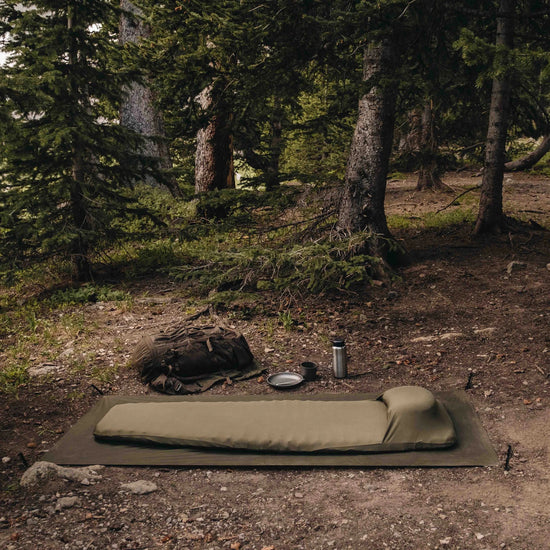
Sleeping Mats
If you want great camping adventures, you need a great sleeping mat
With an Alton camping sleeping mat in your pack, you’ll wake up refreshed and ready to perform at your best. Like all of our best-selling hiking gear, our 5-star rated sleeping mats are crafted with lifelong functionality in mind. Featuring smart weight dispersion technology and micro-adjustable valves for individualised support, our outdoor sleeping pads conform to your body whether you're a front, back, or side sleeper.
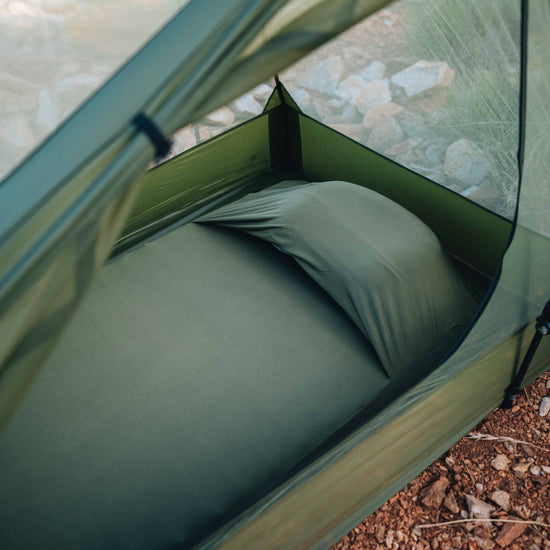
Ultralight sleeping pads built for comfort, durability and performance
Lightweight, compact and ultra-durable, our hiking mattress delivers unparalleled cushioning, thermal insulation, comfort and lifelong functionality out on the trails. We sourced the best quality materials with proven durability and carried out rigorous testing to ensure that our camping sleeping mats and closed-cell foam sleeping pads can withstand prolonged use in harsh environments. With advanced puncture resistance, leak-proof construction and a noise-reducing TPU coating, our camping mats are engineered to optimise your recovery on overnight outdoor adventures.
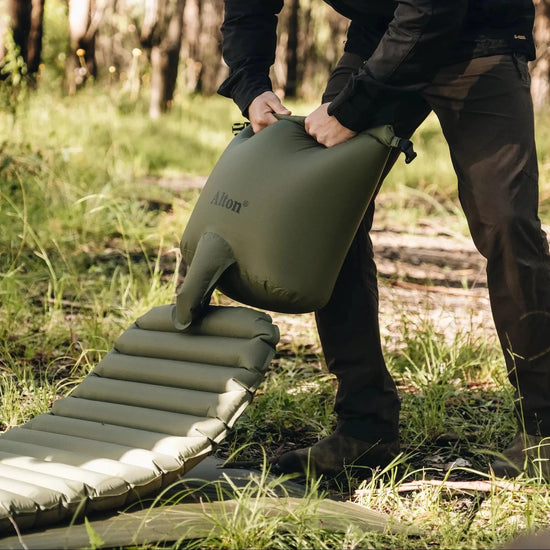
Never hang off the edge of your camping mat again
Never hang off the edge of your mat again. Our collection of sleeping pads includes Regular, Wide, Large, and Double sleeping mat size options that are available in a range of warmth ratings, from Ultralight (R1.5) to Insulated (R4) and Insulated Plus (R6).For next-level comfort, use your camping mat with our Sleeping Mat Fitted Sheet. Constructed from soft, moisture-wicking fabric, our fitted sheets feature a convenient built-in pocket to hold your camping pillow place throughout the night.

Sleeping Mat FAQs
-
Here’s a quick overview of how to choose a good R-value for a sleeping pad:
R-Value 0.5 to 2.0 → Warm (down to 10º at night)
If you only go camping in warm, summery weather, then you don’t need to worry about having much insulation – an R-value of 0.5 to 2.0 will be plenty.
R-Value 2.0 to 3.5 → Cool (down to 5º at night)
A camping mat with an R-value of 2.5 to 3.5 can be used in summer without overheating, but it has enough insulation to keep you warm when the temperature drops in spring or autumn.
R-Value 3.5 to 5.0 → Cold (down to 0º at night)
If you are camping in cold, wintery conditions, then you want a mat with a R-value of 4 or higher.
R-Value 5.0+ → Extreme (-3º or lower at night)
For camping in high-altitude or arctic environments, you need a specialised sleeping mat with an R-value of 5.0 or more.
To learn more, head over to our blog, where we cover everything you need to know about sleeping mat R-values in-depth.
-
A high quality sleeping mat can last around 5-10 years (or even more), depending on how often you use it and how well you care for it.
At Alton, our sleeping mats are built to go the distance. They’re made with premium materials, hand-selected for their proven durability and performance benefits, and are subjected to our rigorous quality control standards. Plus, like everything we make, they come backed with a Lifetime Warranty*, so you can be confident that your Alton sleeping mat will perform as it should as long as you own it.
For more care tips and advice to extend your sleeping mats life, check out this blog post.
-
The sad truth is that even a high-quality sleeping mat can feel way less comfortable than it should if it’s not set up right.
So here are some of our favourite tips to make your sleeping pad more comfortable for camping:
- Don’t over-inflate your sleeping mat. If your mat is inflated to the max, it won’t be able to support your body properly, so you might wake up stiff and sore.
- Invest in a good pillow. Having good neck and spine alignment while you sleep can make a HUGE difference to your sleep quality and comfort.
- Match your sleeping mat to your sleep style. Side sleepers need more cushioning, while back and belly sleepers often prefer firmer, more even support.
- Go wider. Choosing a sleeping mat with extra width can help you stay centred on the mat during the night and offers more support – especially if you like to spread out while you sleep.
- Add an extra layer of cushioning. For extra comfort and warmth, consider using a closed-cell foam mat under your inflatable air mat.
For more tips and tricks to boost comfort, check out this blog post on common sleeping mat mistakes that ruin your comfort – and how to fix them.
-
Yes, sleeping mats are worth it and almost always necessary for overnight camping, hiking, trekking or backpacking adventures. Here’s why:
Comfort
Unless you like sleeping on the cold, hard ground, then you’ll need a supportive and comfortable sleeping mat (or an alternative, such as a camping hammock) for any camping trip.
WarmthEven in warmer weather, the ground can get surprisingly cold at night. A sleeping mat provides an essential thermal insulation barrier, helping you stay warm and cosy.
Recovery
A sleeping mat for camping plays a vital role in ensuring that you get the rest you need to perform at your best.
-
Well, we think our sleeping mat is the best, but cheeky self-promotion aside, the answer to this question actually requires a little more explanation. There is no such thing as the ‘best’ sleeping mat for camping. Instead, there is the best sleeping pad for your specific needs.
For a comprehensive guide to choosing the best sleeping mat for YOU, check out this blog article.
-
Both inflatable sleeping pads and closed-cell foam pads have their place in the outdoors. The best choice comes down to your priorities. So ask yourself, what do you need when it comes to warmth, comfort, weight, durability, reliability, packability?
Inflatable sleeping mats have become the go-to for most modern campers and hikers. They’re thicker, softer, and more supportive compared to closed-cell foam mats. Plus, they come in a huge variety of models offering different insulation levels, packed weights/sizes, and performance benefits. However, inflatable sleeping mats are often quite expensive, especially if you’re looking at high-performance models, and they are vulnerable to punctures, so it’s wise to carry a patch kit just in case.
On the other hand, closed-cell foam pads are virtually indestructible and 100% puncture-proof. They’re simple and effective, take only seconds to set up and pack down, and can be used directly on the rough ground. The downsides are that they have limited insulation options available (usually around R2), can be a bit bulky to carry, and don’t offer much cushioning or support.
Inflatable sleeping mats and closed-cell foam pads actually work really well when used together. By layering your closed-cell foam pad underneath your inflatable sleeping mat, you can boost the comfort, increase insulation, and help prevent punctures. Layering like this is ideal for cold-weather camping in harsh conditions where sleeping mat failure is not an option.
Ultimately, which option is ‘better’ than the other is going to change depending on the scenario – and your own preferences.
-
How thick your sleeping mat should be mostly comes down to personal preference and sleeping position.
Side sleepers tend to prefer a thick, cushioned sleeping mat (7+ cm thick) as this will provide better hip and shoulder support compared to something thinner. They benefit from having extra width, too, so they can spread out a little more.
Back sleepers can get by sleeping on just about anything (lucky bastards) – but they’ll still benefit from having a bit more cushioning (5-7 cm) to give them a buffer against the rocky or uneven ground.
Belly sleepers tend to need more stability from their mat, rather than something super soft and cushy. A lot of belly sleepers prefer a moderately thick sleeping mat, around 5-6 cm) with low bounce and firm, even cushioning. -
Keeping your sleeping mat clean will help it last longer and perform better.
Here’s how to do it:
- Brush off any dirt or debris.
- Inflate the mat and close the valves (you don’t want to let any water get inside).
- Spot clean using a soft, damp sponge or cloth and technical outdoor gear wash.
- Clean over the entire mat, using more water and gear wash solution.
- Wipe over again with clean water to rinse. Repeat until there is no soap residue remaining.
- Towel off and hang or lay the mat out flat in a well ventilated area away from direct sunlight. Make sure it’s 100% dry before storing.
For detailed instructions and more information on sleeping mat care, cleaning and storage, head over to this blog article.
-
Yes, all of our sleeping mats are covered by our All Good Guarantee, a Lifetime Warranty* against manufacturing defects. Our outdoor equipment is built to meet our rigorous durability and performance standards, so you can rely on it to take you further and last a lifetime.
Shop our full range of best-selling gear via our online outdoor store. We offer free shipping for orders over $100 AUD within Australia and $150 USD in the USA. For more information on local and international delivery, please visit our shipping page.